
Most accounts of NGO work describe programmes that are running. This one describes a programme that has stopped, and why. The reasons are worth recording, because they say something about how rural skill training actually works in practice.
Sambal — the Skill and Entrepreneurship Development Institute — began at our Ajmer campus in April 2013. Its purpose was narrow and practical: give rural women and young people a certificate that an employer would recognise, close enough to home that attending was realistic.
What was on offer
Bal Sansar Sanstha was approved by the Rajasthan Knowledge Corporation Limited as a registered training centre, holding ITGK code 12290170, to run two state certification courses: RS-CIT, the Rajasthan State Certificate Course in Information Technology, and RS-CFA, the state certificate course in financial accounting.
Alongside the computer courses, the institute ran sewing and tailoring classes and a photography course. Over its operating years, more than 300 young people completed RS-CIT or a sewing certificate through the centre.
The reason a rural training centre matters is proximity. A young woman in a village outside Ajmer may be permitted to attend a course twenty minutes away, and not one in the city. The centre existed because that distance decides who gets trained.
Covid, and the arithmetic that followed
The lockdowns of 2020 and 2021 stopped admissions altogether. For two full years the centre took none.
Recovery was slow. The 2023-24 session brought 25 admissions. In 2024-25 we reached 35. That was real progress from a standing start, and the direction was right.
Then the requirement changed. The Government of Rajasthan raised the minimum number of admissions needed to continue operating as a Gyan Kendra to 50. The centre could not reach that number, and it has consequently closed. We were not alone: many centres across the state closed for the same reason.
Thirty-five admissions is a success if you are measuring a recovery, and a failure if you are measuring against fifty.
What the threshold assumes
It would be easy to write the rule as unreasonable. It is more useful to describe what it assumes.
A minimum of fifty admissions is a sensible efficiency measure for a centre in a town with a dense catchment. It is a harder test for a centre serving villages, where the eligible population within travelling distance is smaller and where a proportion of that population — particularly young women — face constraints on movement that have nothing to do with their interest in the course.
The effect of a uniform threshold is therefore not uniform. It is felt first by the centres serving the most dispersed and least mobile learners. That is a predictable consequence, and worth stating plainly rather than complaining about.
What we are doing next
Bal Sansar Sanstha remains committed to skill development for rural women and youth, and skill development remains one of our founding objectives.
We are exploring alternative channels: programmes affiliated to the National Skill Development Corporation, where BSS is registered as a training provider, and vocational partnerships that suit learners who are out of school. The requirement we are designing around has not changed since 2013: a course close enough to attend, and a certificate that means something to an employer.
The record
Between 2013 and 2025, more than 300 rural women and young people left this centre with a certification they did not have before. That number does not disappear because the centre has closed.
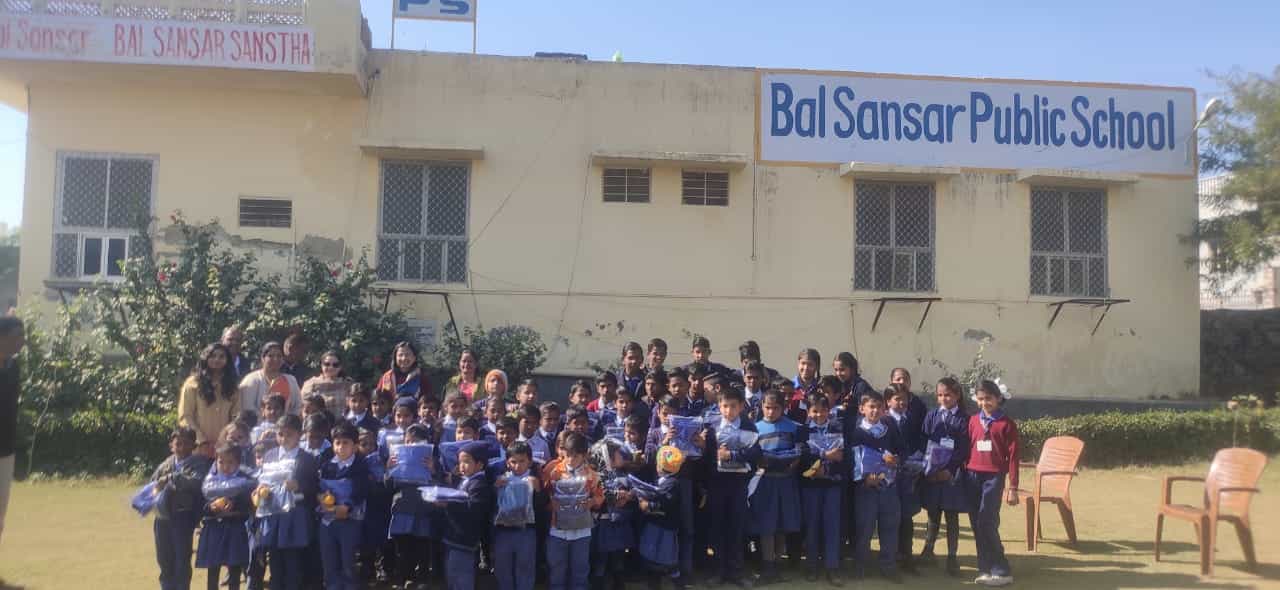
Our other programmes continue: Bal Sansar Public School in Hathikhera, the Aarogyam Kendra community health centre, and the Taiyari adolescent health programme. You can see our full programme history or support the work.
Support this work
Stories like this are made possible by supporters like you. An 80G-eligible donation funds education and health programmes across rural Rajasthan.
Donate Now