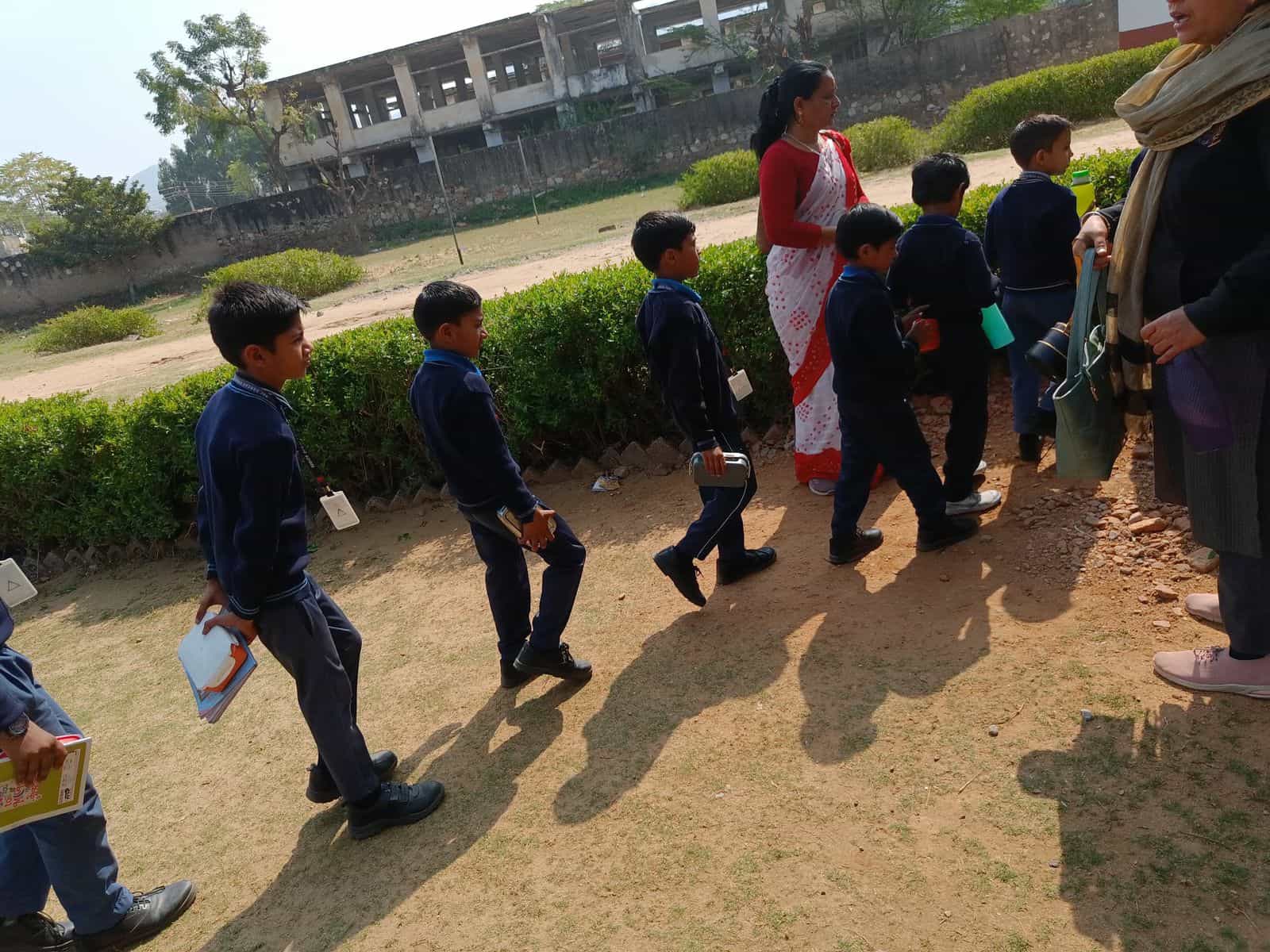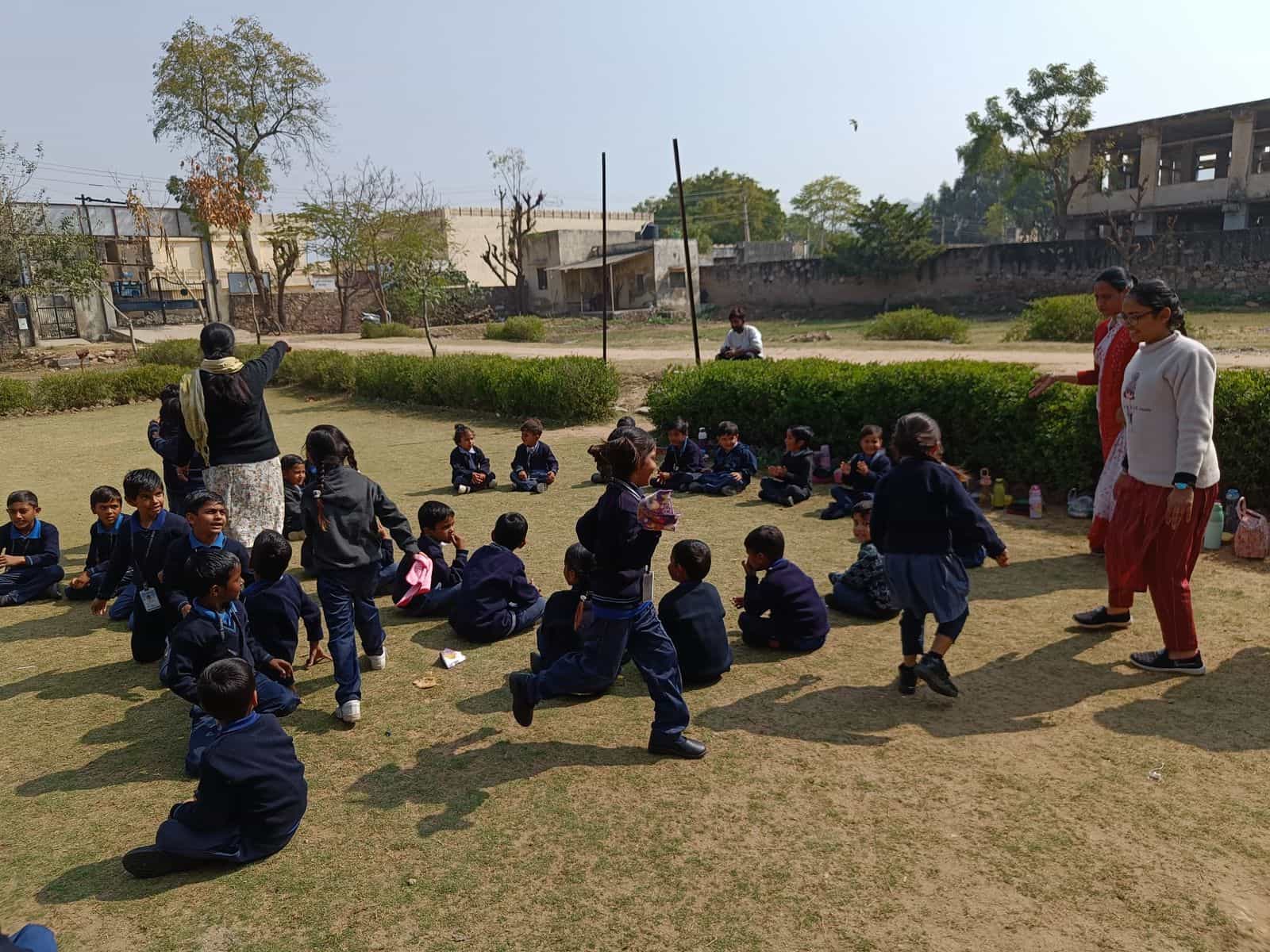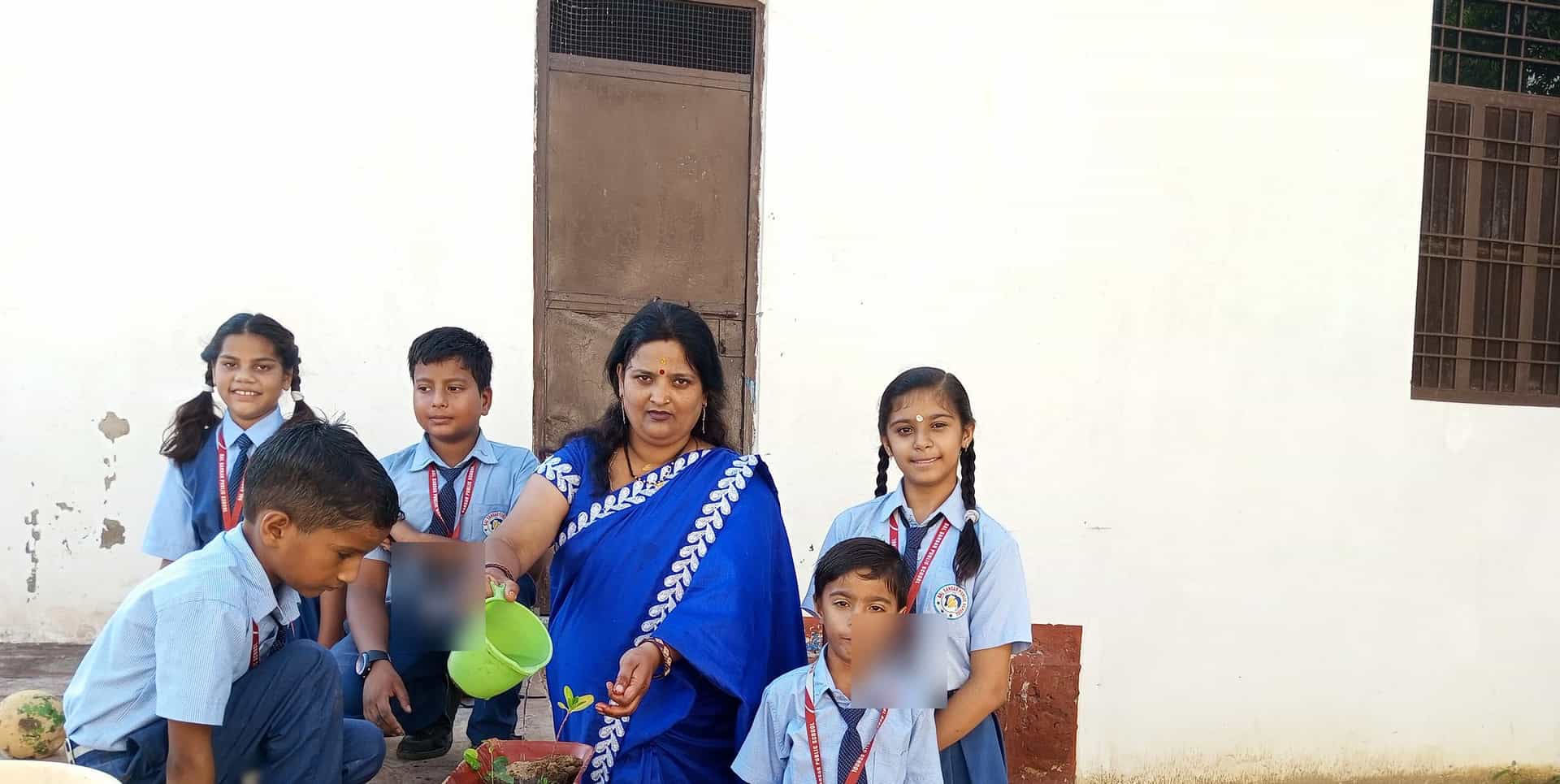
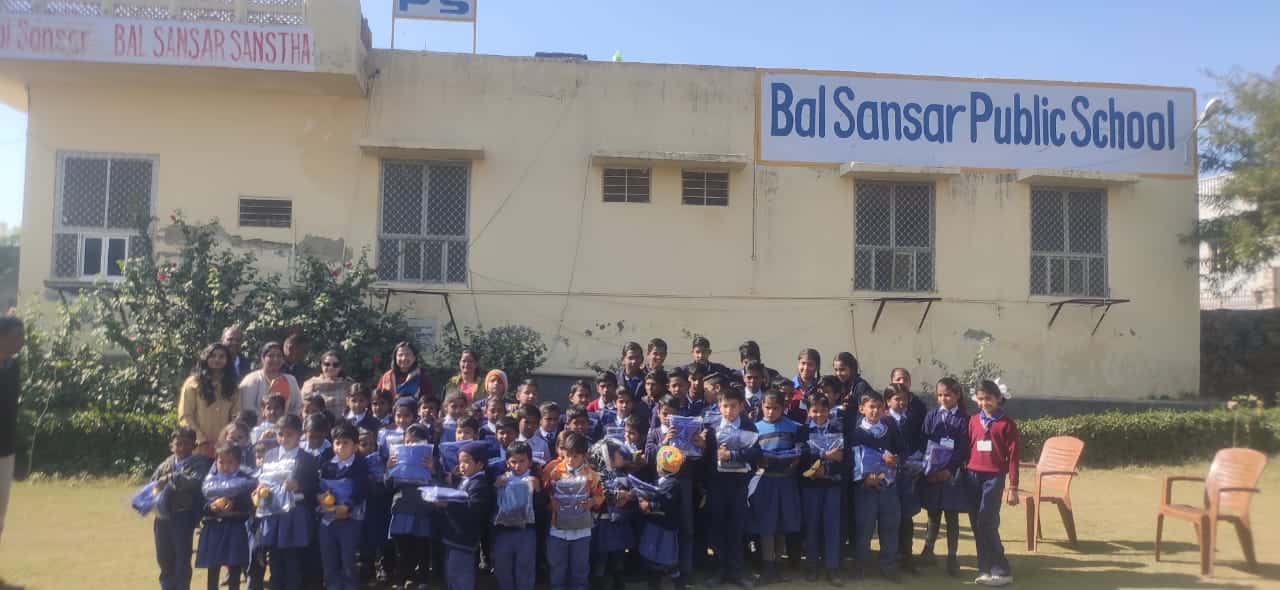
Bal Sansar Sanstha's field office is in Village Hathikhera, on Foysagar Road in Ajmer district. It was from this location that Bal Sansar Public School came into existence in 2013 — a response to a practical gap in rural schooling that the organisation observed in the surrounding villages.
Today, BSPS runs from playgroup through Class 8. In the 2023–24 session, 128 students attended from the villages around Hathikhera. This post is not a programme report. It is a reflection on what running a village school in rural Rajasthan actually involves — the decisions that need to be made, the things that work, and what an institution like this comes to mean to the families it serves.
Starting From Pre-Primary
The decision to begin with pre-primary education was deliberate. Children who start formal learning at ages three or four tend to have better outcomes through primary school. In rural communities where formal schooling may be a first-generation experience for a family, the early years also serve another purpose: they are how a school builds its initial relationship with parents and the wider community.
Running a playgroup or nursery class in a village is different from doing so in a town. Teachers need to understand local rhythms — household schedules, the reasons a child might be absent for a week and need following up, the concerns a new parent might have about sending their first child to school. This requires continuity of staff and continuity of relationship. Both take years to establish.
The Fee Question
One of the ongoing decisions any community school must navigate is how to set and manage fees. BSPS has always kept fees flexible and subsidised, with a clear institutional position: no child is turned away because a family cannot pay.
This is a more complicated commitment than it sounds. A school with subsidised fees still needs to pay teachers, maintain classrooms, replace materials, and sustain daily operations. It requires consistent donor support and careful financial management. For Bal Sansar Sanstha, this has meant treating the school as a supported programme — part of a broader institutional mission — rather than expecting it to be financially self-sustaining through fees alone.
The practical consequence is that BSPS remains genuinely accessible. The 128 students enrolled in 2023–24 represent who actually attends, not a subset of those who could afford to.
Girls at 60 Percent
In the 2023–24 session, 60 percent of BSPS students were girls. In rural Rajasthan, this is not automatic. It reflects decisions made at the household level — by parents and extended families — and it reflects the school's standing within the community.
We are not going to attribute this to any single factor. Some of it reflects broader generational shifts in attitudes toward girls' schooling across Ajmer district. Some of it reflects the school's reputation as a known and trusted institution in the area. Some of it reflects years of consistent relationship between staff and the families who send their children.
What can be said is that the school does not run separate campaigns targeting girls' enrolment specifically. The 60 percent figure is a result of the school being trusted enough that parents choose to send daughters as well as sons. Sustaining that trust requires consistent conduct over a long period — it is not produced by a single initiative.
The 2020 Lockdown
In March 2020, schools across India closed. BSPS closed too. But the school did not stop working.
Teachers began visiting students' homes. Worksheets were printed and delivered by hand. Lessons continued over phone calls. This was not a digital solution — there were no devices to distribute, and reliable internet connectivity in the villages around Hathikhera was not available. It was teachers walking to houses and maintaining contact with families through whatever was possible.
Every one of the 156 students enrolled at that time remained enrolled through the lockdown. Every student was promoted that year. There were no dropouts.
We mention this not as an exceptional achievement, but as evidence of what an institution with deep community roots can do when formal structures are disrupted. The school knew where every student lived. Teachers had existing relationships with parents. The community understood the school well enough to cooperate with an unconventional approach to continuing education.
It also demonstrated what continuity of staff means in practice. Teachers who had been at the school for years knew which students were most at risk of drifting away and how to reach their families. That kind of institutional knowledge cannot be assembled quickly.
Technology in a Village Setting
Through CSR support from Mitsubishi Elevator India Pvt. Ltd., BSPS established two smart classrooms — equipped with interactive teaching technology and updated seating facilities.
Two smart classrooms in a school of 128 students is not a comprehensive digital education infrastructure. It is a meaningful addition for students who have no access to digital tools at home. For families in the area, it also signals something about the school's direction: that BSPS is investing in its physical environment rather than simply maintaining it.
For students in the upper classes approaching Class 8, some familiarity with digital tools has practical value. Secondary schools and beyond increasingly use technology in instruction. Students who arrive at those institutions with prior exposure are better positioned than those who arrive without any.
External support of this kind will remain important as the school plans further improvements to its infrastructure over time.
What Continuity Actually Means
Looking back at more than a decade of running BSPS, the factor that stands out most consistently is continuity — of the institution itself, of its staff, and of its relationship with the surrounding community.
Village schools that open and close based on funding cycles create real disruption. Children enrol, families organise their lives around the school, teachers accept positions — and then the project ends. Bal Sansar Public School has operated without interruption since 2013. This matters more than most other aspects of what it does.
When a family considers enrolling a younger child, they already have a history with the school. An older sibling may have attended. A neighbour's children may have completed Class 8 there. There is a track record that can be observed and evaluated over years rather than inferred from promotional material. Institutional trust of this kind is built through consistent presence over time — it cannot be created through communications alone.
Registered and Regulated
BSPS operates under private school registration rules of the Government of Rajasthan. This places it within a regulatory framework with obligations around curriculum standards, teacher qualifications, and basic infrastructure. Registration means the school's certification of students carries formal standing — a child who completes Class 8 at BSPS has done so at a recognised institution.
The curriculum at BSPS is designed to be culturally sensitive and environmentally grounded, with an emphasis on holistic child development through multiple intelligences. This approach operates within, not against, the regulatory framework — the goal is quality that is both formally recognised and contextually appropriate for the communities it serves.
The Road Ahead
BSPS currently runs through Class 8. There are plans for gradual expansion — to secondary and eventually to senior secondary levels. This kind of expansion requires additional classrooms, teachers with subject specialisations suited to higher grades, further regulatory compliance, and sustained funding.
Expansion will happen carefully. The village school model works only when the institution has the capacity to genuinely serve the students already enrolled, rather than growing enrolment faster than quality can be maintained. More than a decade of operation is not a reason for complacency — it is the foundation of a reputation that any growth must be worthy of.
Across those years, BSPS has not closed, has not turned away students for inability to pay, and has held the trust of the community it serves. That record is what any future growth will rest on.
To learn more about Bal Sansar Public School or to support the school through a donation, visit the links below.
Support this work
Stories like this are made possible by supporters like you. An 80G-eligible donation funds education and health programmes across rural Rajasthan.
Donate Now