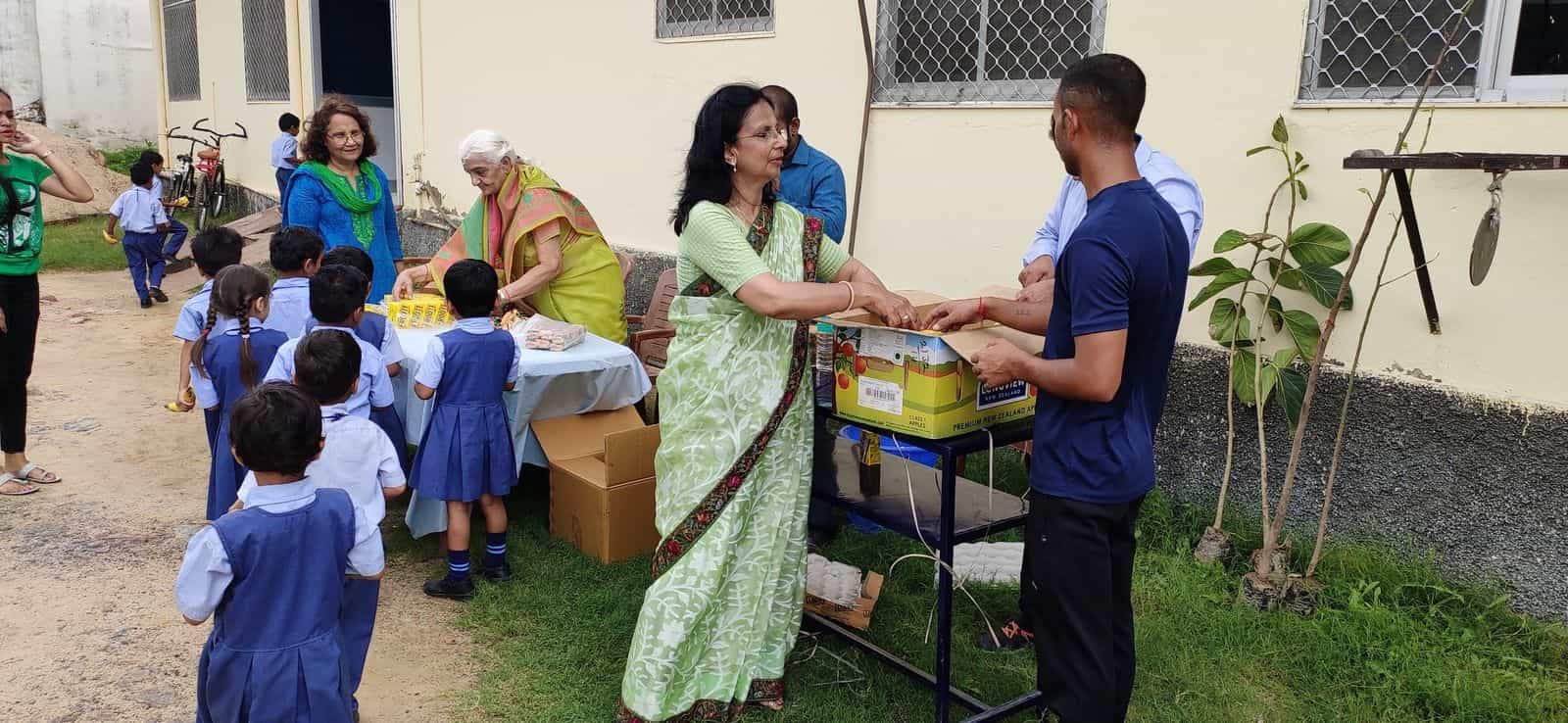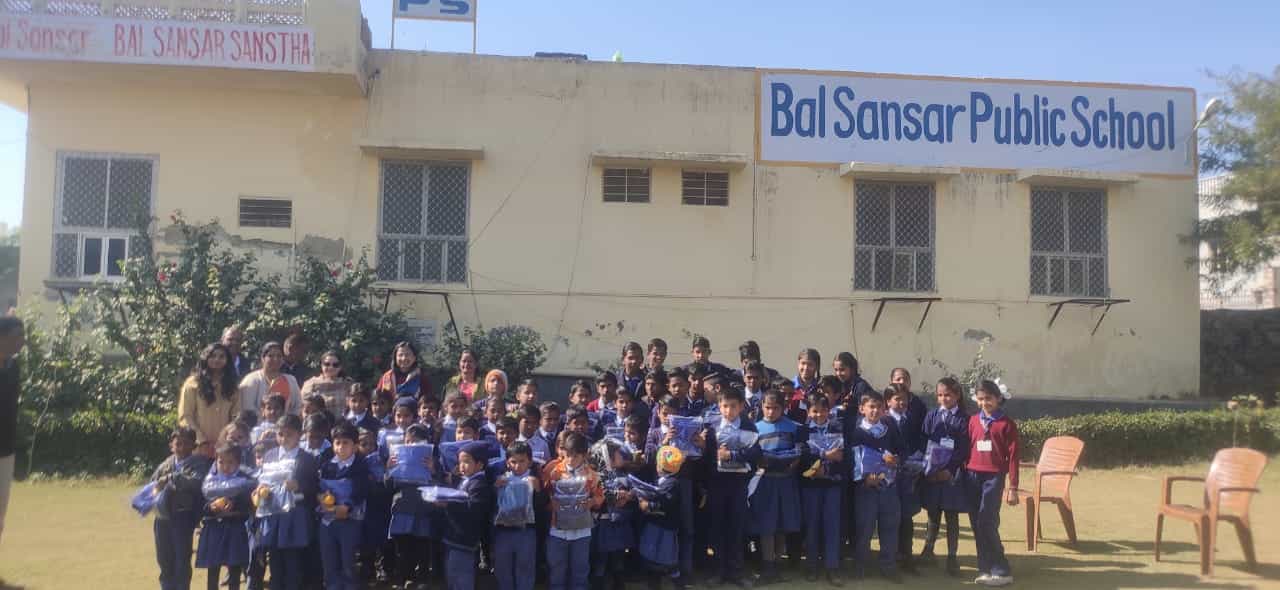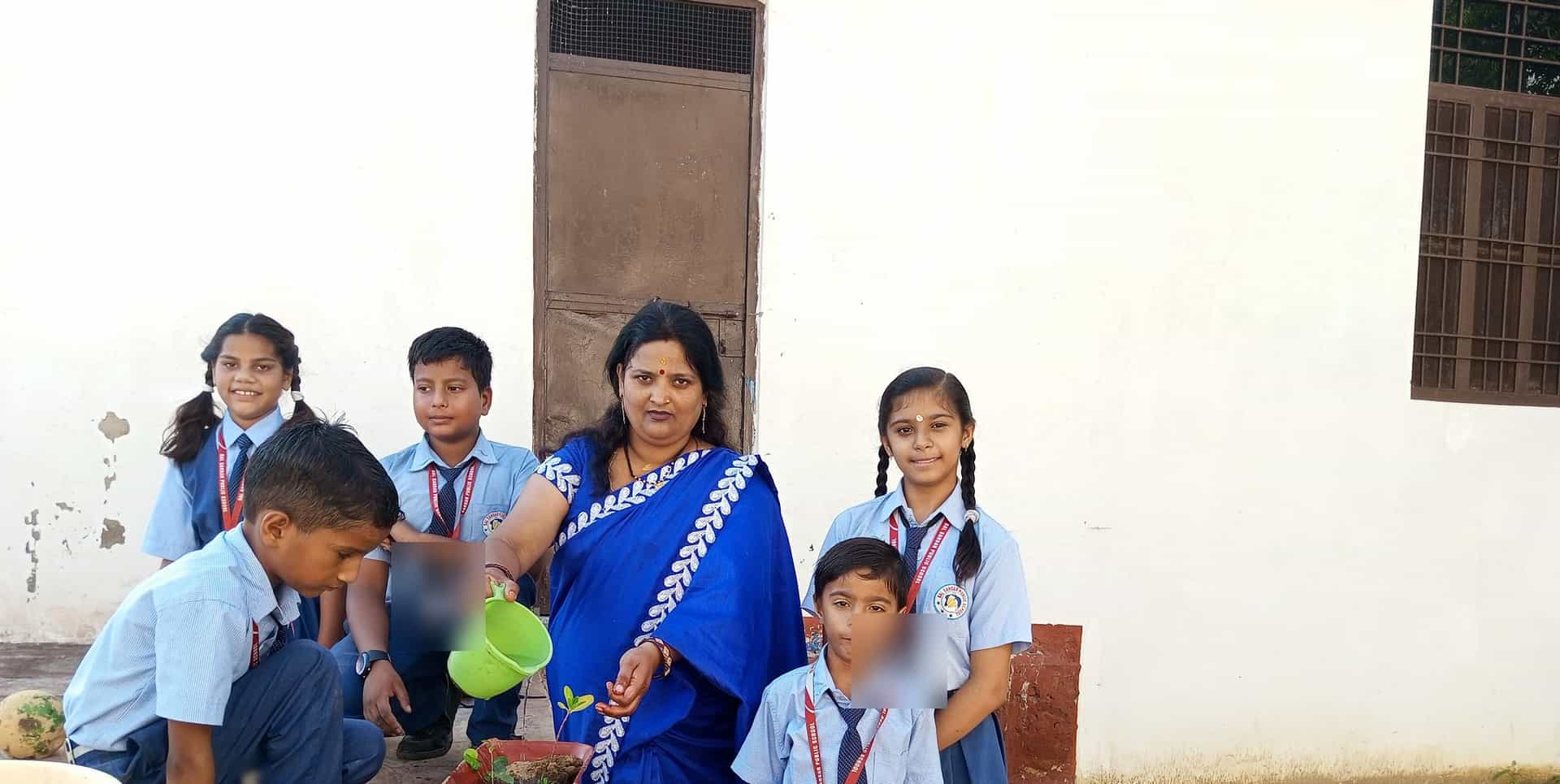


Bal Sansar Public School teaches from Nursery to Class VIII. In the 2025-26 session, 154 children were enrolled, and every student of Classes V and VIII who sat the Rajasthan Board examinations passed — all of them in the first division.
Then they leave. And what happens after that is decided, more often than not, by how far the next school is.
The distance problem
The single most common reason a girl's education ends after Class VIII in the villages around Hathikhera is not money and not ability. It is that she is not permitted to travel far from her village to continue studying.
This is worth stating precisely, because it is frequently described as a lack of interest in girls' education, and that is not what we observe. Families send their daughters to BSPS. They come to the school, ask about progress, attend the events. The same family that does all of that may still decline to put a fourteen-year-old on a bus to a town some distance away, twice a day, for four more years.
The constraint is distance and safety, and it binds hardest on exactly the students who have the most to gain.
The question is not whether these families value education. They demonstrate that every morning. The question is how far they can send a daughter to get it.
What proximity changes
If a school offering senior secondary education is nearby, the calculation changes entirely. The same family that will not permit a long journey will readily permit a short one. That is the whole of the argument for taking BSPS further: not because education elsewhere is inferior, but because education within reach is the only education some of these students will actually receive.
Sixty per cent of BSPS students are girls. Continuity to senior secondary level would therefore have its largest effect on the group least able to travel for it.
What it would take
We are not going to describe this as a simple next step. Extending a school upward means more than adding names to a register.
It requires classrooms and laboratory facilities appropriate to senior secondary science and commerce streams. It requires subject teachers qualified at that level, which means competing for staff in a rural location. It requires the relevant approvals and recognition from the education authorities. And it requires the operating budget to sustain all of it year after year.
BSPS runs on nominal, flexible fees, and roughly half the families pay. Most parents are daily-wage labourers. The school has never been financially self-sustaining, and it has never been designed to be. Bal Sansar Sanstha runs it as a supported programme. Expansion multiplies that commitment rather than reducing it.
The honest position
This is an aspiration, not an announcement. We have not set a date, and we will not publish one until the classrooms, the teachers, the approvals and the funding are all in place.
What we can say is what the school has already demonstrated. It began in 2013 with pre-primary classes. It has grown to 154 students across fourteen years. It has produced a 100 per cent board result, in both examination grades, from a village catchment where most parents did not finish school themselves. The institution can do this work. What it needs is the capacity to keep doing it for four more years of each child's life.
How this gets built
Expansion of this kind is funded, not willed. It is the sort of project that suits a corporate CSR partnership: a defined capital requirement with a measurable outcome, in a school with a documented track record. Our CSR page sets out how those partnerships work, and BSS is CSR-1 registered.
For individual donors, support for the school's running costs is what keeps the current 154 students in class while we work towards the next stage. You can read more about the school, see our work with women and girls, or support it directly.
Support this work
Stories like this are made possible by supporters like you. An 80G-eligible donation funds education and health programmes across rural Rajasthan.
Donate Now