
A health camp is a good answer to a real problem. Where families cannot easily reach a clinic — because of distance, cost, working hours, or the simple difficulty of taking a whole day away from daily-wage work — you bring the clinic to them for a day.
Bal Sansar Sanstha has run camps of this kind across Ajmer district for years: free general check-ups, medicines, and nutritional counselling for families in villages that would otherwise go unexamined. At Bal Sansar Public School, health check-ups run for students every six months as a matter of course.
What a camp does well
The strength of a camp is reach. It goes where the need is, it removes every access barrier at once, and it examines people who have not seen a doctor in a long time — sometimes people who have never had a routine check-up at all.
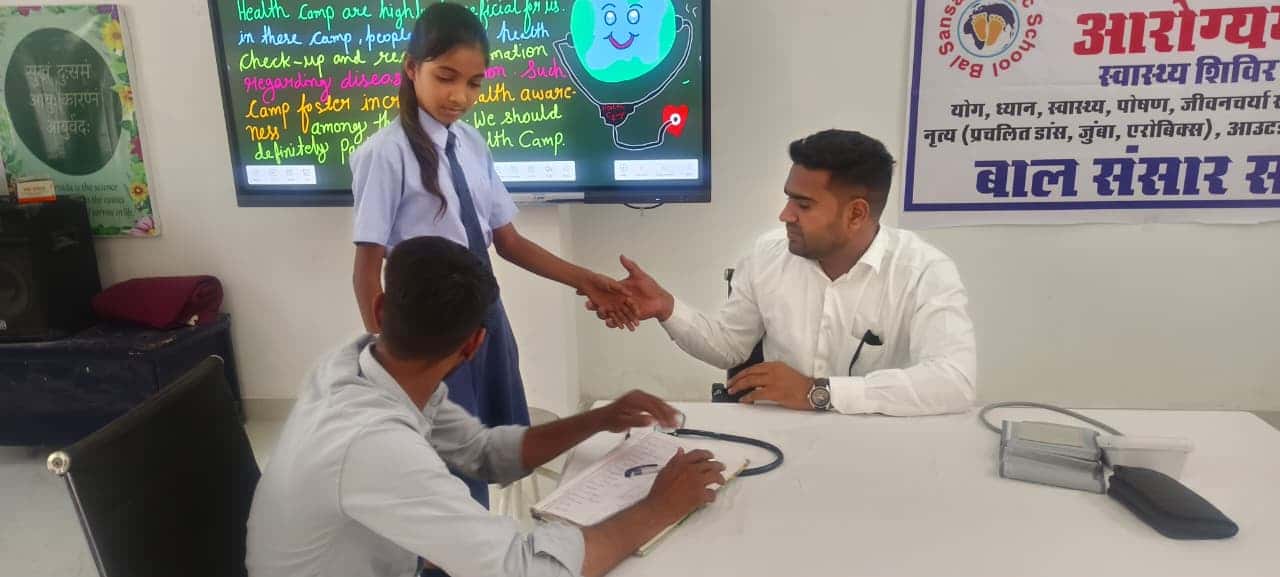
Camps are also good at detection. A blood-pressure reading or a haemoglobin test takes minutes, and turns an invisible condition into a known one. In a district where anaemia among women and adolescent girls is a documented public-health problem, screening at scale has real value.
What a camp cannot do
The weakness is equally clear, and it is structural: a camp ends.
Detection is only half of care. When a camp identifies a woman with anaemia or a child needing follow-up, the appropriate response is a course of treatment and a review some weeks later. A one-day event cannot provide that. The team packs up, and the follow-up depends on the family finding its way to a facility — which is the barrier the camp existed to remove.
A camp is very good at finding out who needs care. It is not built to provide the care that follows.
The centre
On 26 January 2026, the Aarogyam Kendra opened at our Hathikhera campus — a 1,517 sq. ft. community health centre built with a CSR grant of ₹40 Lakh from Cochin Shipyard Limited.
It is a permanent facility with a hall for yoga, naturopathy sessions, health camps and awareness activities; a counselling room; a doctor's consultation room; a staff room and store. It is expected to serve at least 1,000 families a year.
The distinction that matters is not the building. It is continuity. A woman identified as anaemic can now be counselled, treated and reviewed at a place that will still be there next month. A system of health monitoring and follow-up care becomes possible for the first time.
What the centre offers
The Kendra's work is built around four things the surrounding villages need:
Anaemia prevention and nutrition awareness, targeting women, children and adolescent girls, with counselling and linkage to government nutrition schemes where families are eligible.
General health services — periodic check-ups, immunisation for children, health monitoring and follow-up.
Yoga and naturopathy sessions, workshops on stress management and meditation, and de-addiction awareness and counselling.
Counselling and awareness on mental health, reproductive health, hygiene and disease prevention, delivered as ongoing programmes rather than one-off events.
Camps have not stopped
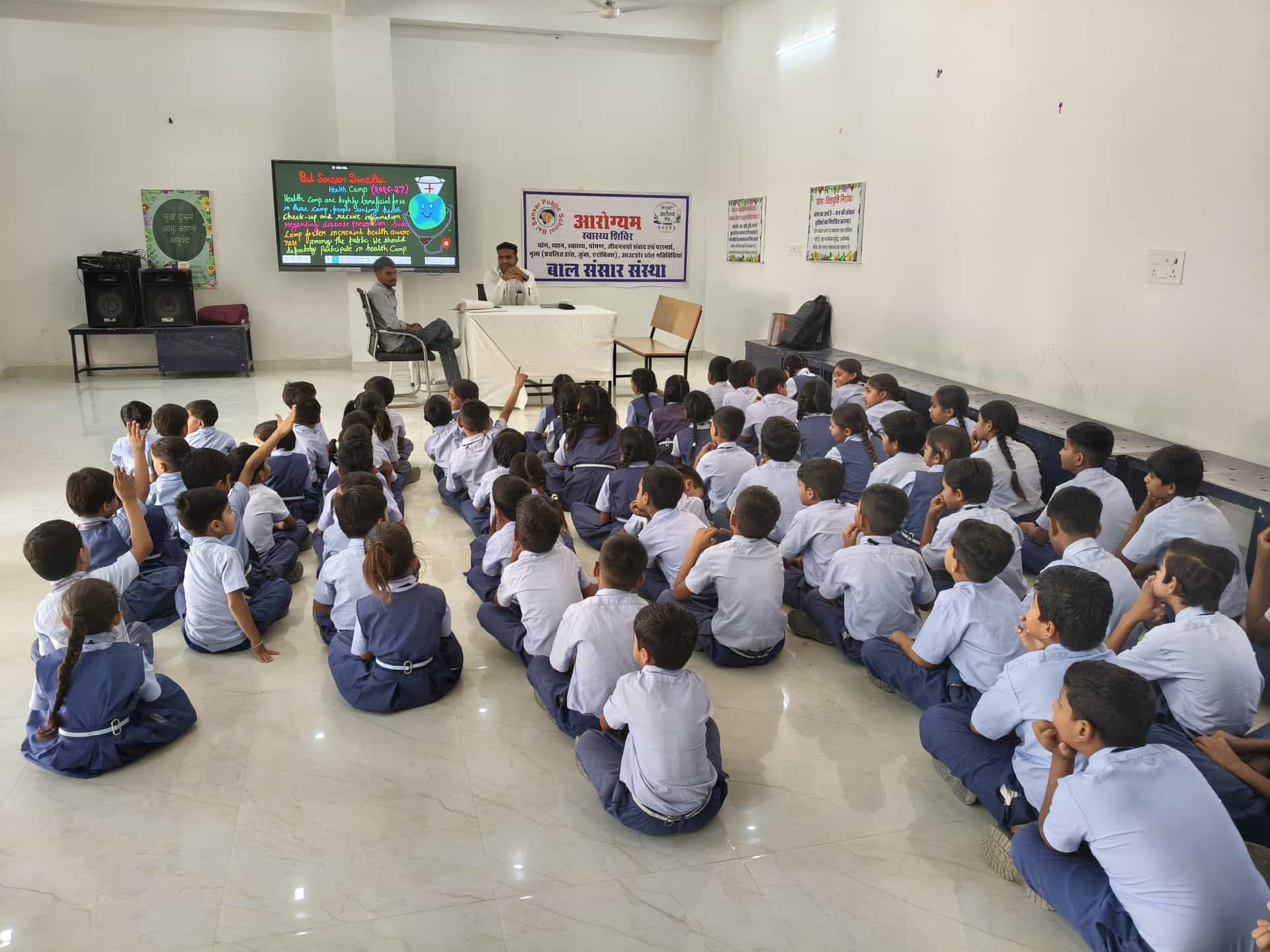
The Kendra does not replace outreach; it anchors it. Camps remain the right instrument for reaching villages at a distance from Hathikhera, and for finding people who would not otherwise present themselves. A camp held in May 2026 at the school provided screening, nutrition and lifestyle sessions, and yoga and movement activities for students and staff.
What has changed is where the thread leads. A camp that finds a problem can now refer to somewhere specific — with a room, a schedule, and staff who will still be there.
You can read about the Aarogyam Kendra, our work in Ajmer district, or support community health here.
Support this work
Stories like this are made possible by supporters like you. An 80G-eligible donation funds education and health programmes across rural Rajasthan.
Donate Now