In 2009, if you wanted to reach a woman in a village in Ajmer district with health information, you had a short list of options. Television ownership was patchy. Print assumed literacy that many women did not have. Mobile phones were arriving but were rarely hers to hold. What almost every household did have, and what women listened to while working, was a radio.
Babli Boli was built on that observation. Between August 2009 and March 2010, Bal Sansar Sanstha broadcast 52 radio episodes across Ajmer district carrying information on HIV, AIDS and sexually transmitted infections to rural women and adolescent girls. The programme was conceptualised and approved by the National AIDS Control Organisation, funded by UNDP, managed by the Population Foundation of India, and implemented on the ground by BSS.
Radio alone is not a programme
Broadcasting is easy to measure and easy to overestimate. An episode goes out; how many people heard it, and what did they do differently afterwards? The design of Babli Boli answered that by refusing to let the broadcast stand on its own.
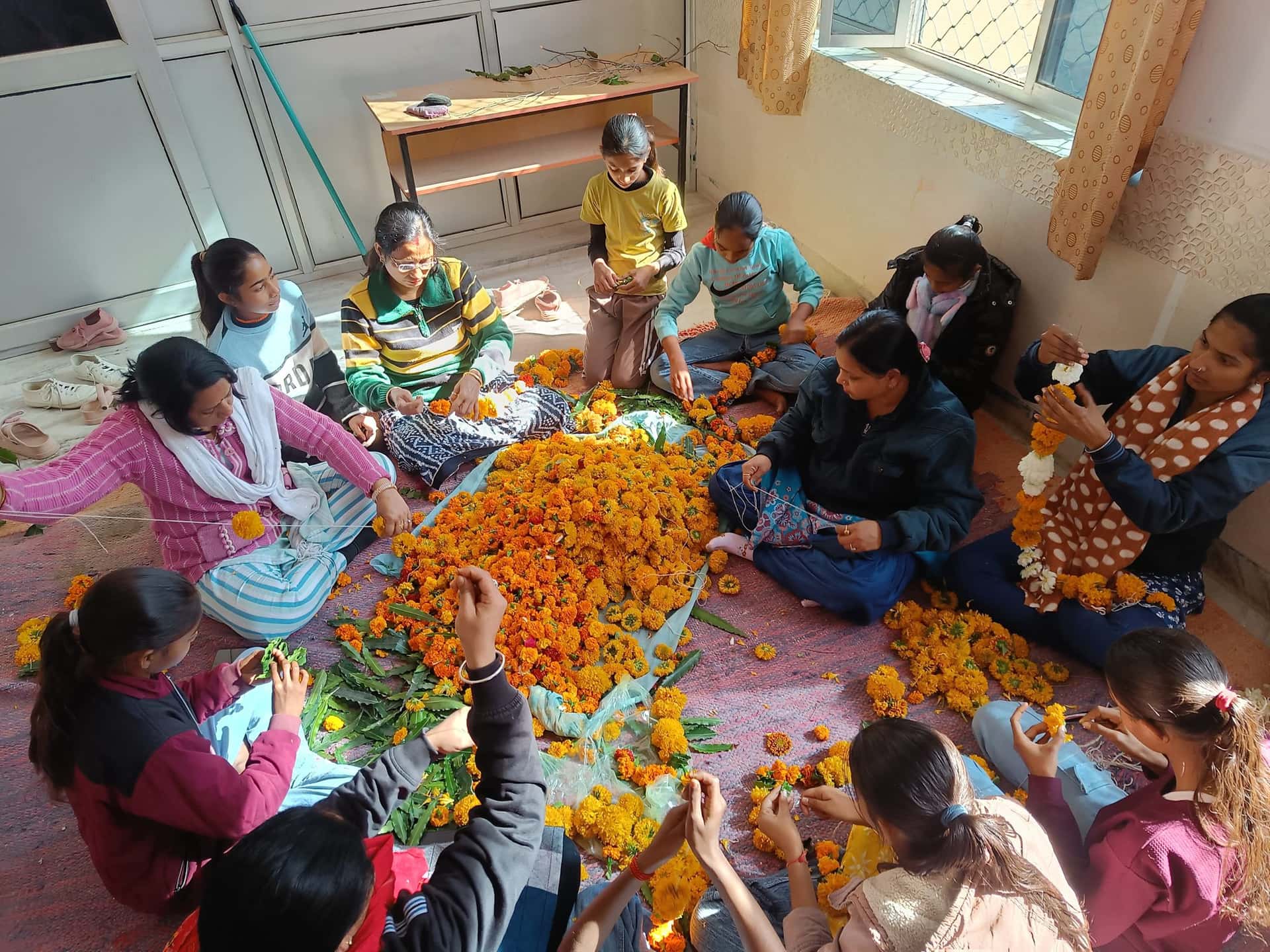
Around the episodes, the project formed 100 Rural Women Listeners Clubs. Each club was a group of women in a village who gathered to listen together, and then to talk. A leader was identified for every club, and all 100 leaders were trained. The clubs gave the broadcast something a radio signal cannot provide by itself: a room in which a woman could ask the question she would not ask a stranger, and hear that other women had the same question.
The broadcast reached ears. The listeners clubs are what turned listening into asking.
The numbers, and what each one means
Two figures from this project are often quoted together, and they measure different things. The 100 clubs had 14,670 members between them. Beyond the club membership, a further 3,068 women and girls were reached through the project's community activities. Together that is 17,738 women and girls reached in total.
We are careful to keep those two apart. Club membership means a woman who joined a group that met regularly. Total reach includes women who attended a village event or a special-day activity without becoming club members. Both are real; they are not the same commitment, and reporting them as one number would flatter the project.
What the work looked like week to week
The field team ran regular community mobilisation across the 100 project villages: promotional activities, special-day observances, and the steady, unglamorous work of persuading families that a women's listening group was a reasonable thing for their household to permit.
Teams from NACO and the Rajasthan State AIDS Control Society visited during the project. A mid-term evaluation was carried out by an independent agency appointed by NACO and the Population Foundation of India. The evaluation commended the project team's efforts.
What the women said at the end
The clearest finding at the close of the project came from the participants. Women and adolescent girls in the project villages said the radio campaign should continue for a longer duration, and that it should be extended into the villages the project had not covered.
That is a particular kind of result. Health programmes often end with a report on what the implementer achieved. This one ended with the intended audience asking for more of it — which is the strongest evidence that the format fitted the lives of the people it was designed for.
Why we still talk about it
Babli Boli ended in 2010. We return to it because its central lesson has outlasted the medium: information reaches people through the channel they already use, and it changes behaviour when there is a group in which it can be discussed. The technology has moved on. The design principle has not.
That principle runs through the programmes Bal Sansar Sanstha operates today — the Taiyari adolescent health programme across 30 Gram Panchayats, and the Aarogyam Kendra, our community health centre in Hathikhera, where counselling happens in a room built for it.
You can read more about our work with women and girls, or support it directly.
Support this work
Stories like this are made possible by supporters like you. An 80G-eligible donation funds education and health programmes across rural Rajasthan.
Donate Now